After Mom passed, we almost threw away her old recipe box. It was stained, yellowed, and quite literally held together with tape. Inside were the handwritten cards of our whole childhood: apple pie, chicken soup for sick days, her famous Sunday meatloaf. We were sorting her kitchen, deciding what to keep — and we nearly decided wrong. At the very back of that box was a card none of us had ever seen. It wasn't a recipe at all.
!An old stained recipe box held together with tape, filled with handwritten index cards
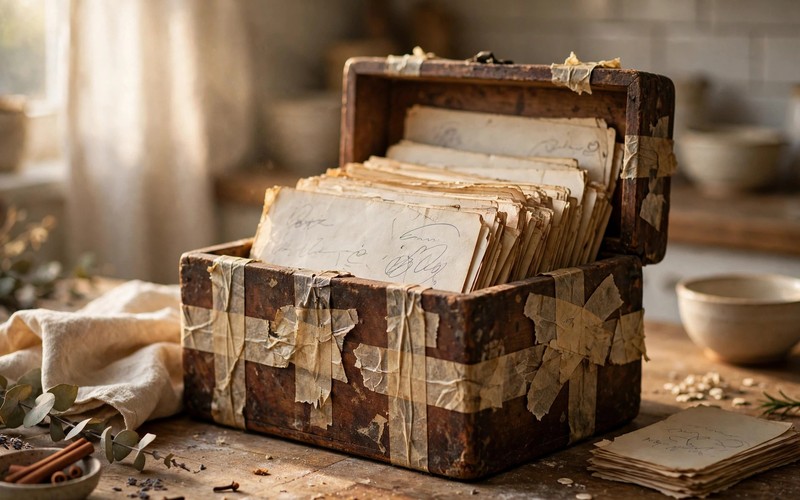
Stained, yellowed, and held together with tape — Mom's recipe box.
Sorting Her Kitchen
The hardest part of losing a parent is not the funeral. It is the quiet weeks after, when someone has to go through the house and decide what stays and what goes. We stood in Mom's kitchen with boxes and trash bags, and every drawer felt like a small argument between grief and practicality. Keep the good pans. Donate the chipped mugs. Throw away the expired spices.
The recipe box sat on the counter through all of it, too worn to look valuable and too familiar to throw away without a second thought. It had lived in that kitchen for as long as any of us could remember, its corners soft from decades of hands, its lid held shut with tape that had yellowed along with the cards inside. We almost put it in the donate pile. We almost put it in the trash. Twice, one of us picked it up and set it back down again, unable to explain why it felt wrong to let it go.
Thank goodness we didn't. Because a recipe box is never just a box. It is a life, written out one card at a time, in the handwriting of the person who fed you.
A Childhood Written on Index Cards
Mom's apple pie meant autumn. Every October, the house would fill with cinnamon and butter, and we would come home from school to find her at the counter, sleeves pushed up, apples piled high, humming something she only half remembered. Her chicken soup appeared like medicine whenever one of us was sick — not from a can, never from a can, but simmered all afternoon until the whole house smelled like being taken care of. The Sunday meatloaf meant everyone at the table, whether they felt like it or not, because Sunday was sacred and nobody got to skip it.
She wrote them in her careful hand, with notes in the margins — extra cinnamon, for when Dad's had a long week, double this one, they always ask for seconds. Those little notes were the real recipes, the parts no cookbook could teach: who liked what, who needed cheering up, which dish belonged to which season of our lives.
We thought we knew everything in that box. We had cooked from those cards ourselves. We had spilled flour on them and stained them with tomato sauce, the way children do when they are learning at their mother's elbow. We were wrong about the most important card in it, because the most important card was not a recipe, and none of us had ever seen it.
!Two adult siblings sorting through their late mother's kitchen and recipe cards
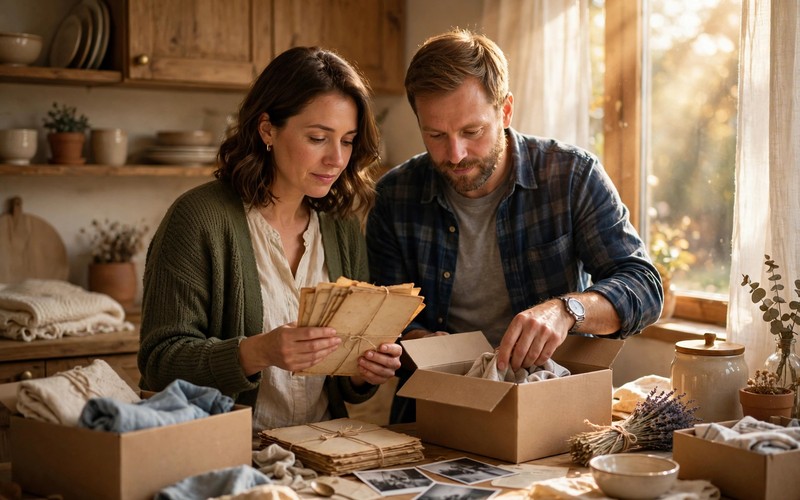
Sorting her kitchen, deciding what to keep — and nearly deciding wrong.
The Card at the Very Back
It was tucked behind all the others, in an envelope none of us recognized. It was not written for a holiday. It was not written for a birthday. It was written for exactly the moment we were standing in — the moment when her children would be in her kitchen, sorting through her things, missing her so much it hurt to breathe.
In Mom's own handwriting, it said:
"If you're reading this, I'm gone. Don't cry at the kitchen table. Cook something I loved, call your sister, and laugh about me. That's how I want to be remembered."
We stood there and did the one thing she told us not to do. We cried at the kitchen table. But then we read it again, and we understood what she had really done. She had not written us a goodbye — she had written instructions for staying a family. Every word was about our life after: together, cooking, calling, laughing. She knew grief would try to pull us apart, into our own houses and our own sadness, and she left a card at the back of the box to pull us back together instead.
That is why she hid it there, of course. She knew her children would find it in the place that held their happiest shared memories, exactly when they needed it most. Not in a lawyer's office. Not in a drawer we would never open. In the recipe box, where love had always lived in her house.
!Hands holding an old envelope tucked behind recipe cards in a worn recipe box
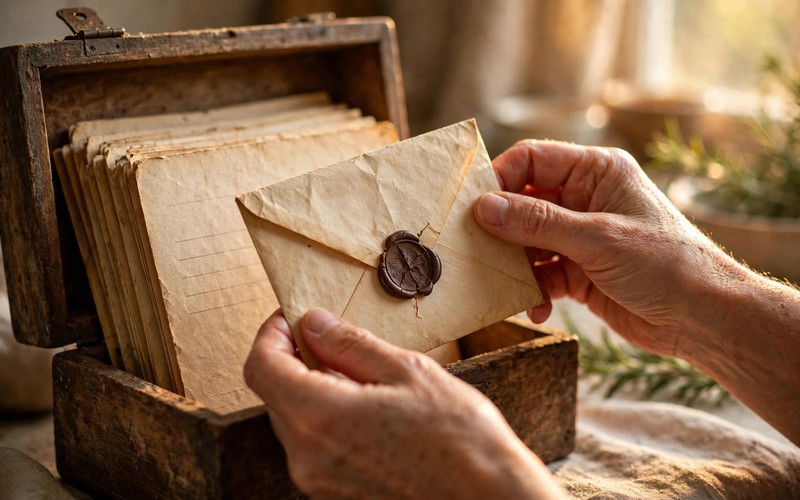
Tucked behind all the others: an envelope none of us recognized.
That Night, We Baked the Pie
So that night, we did what the card said. We called our sister, told the funny stories — the burnt Thanksgiving, the time Mom dropped a whole pie and served it anyway, calling it "deconstructed" — and baked her apple pie with the extra cinnamon. The house filled with the smell of our childhood again.
It did not fix the grief — nothing does. Grief does not get fixed; it gets carried, and some days it gets lighter because someone is carrying it with you. But for one evening, Mom was right there in that kitchen: in the recipe, in the laughter, in the way we all reached for the same wooden spoon without thinking. We laughed until we cried again, and then we laughed some more, because that is what she had asked for, and for once, we did exactly what Mom said.
Her card is back in the box now. It is the first one we show anyone. Not the apple pie, not the soup, not the meatloaf — the card that taught us what the box was really for. The recipes were never the point. They were just the way she kept us at the same table.
What We Keep, and Why
Somewhere in your parents' house is an ordinary object carrying an extraordinary amount of love. It might be a recipe box held together with tape. It might be a toolbox, a sewing basket, a shelf of old records. It will not look valuable. That is the whole point — its value was never in the object. It was in the hands that used it, and the life it fed.
So before you throw anything away, open it. Look at the very back. Read the margins. Call your sister. Cook something they loved. And laugh about them, the way they would have wanted.
Share this with your sister, your brother, or anyone whose mom taught them love started in the kitchen.
!A family baking an apple pie together in a cozy kitchen at night, laughing
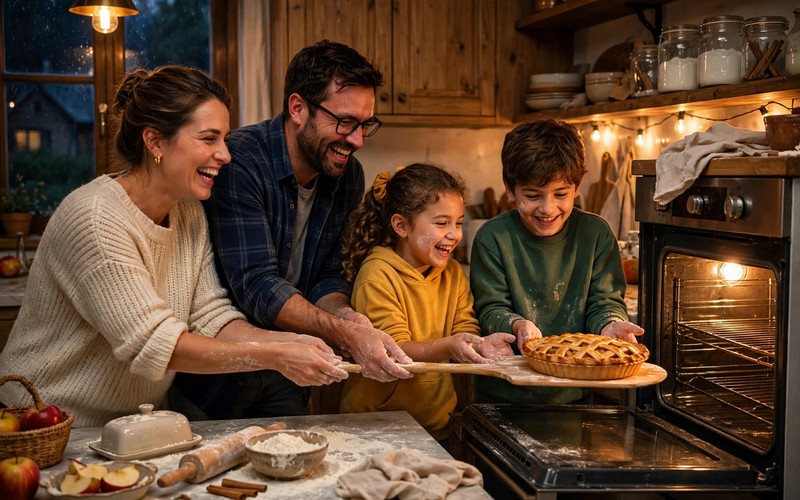
That night, we did what the card said — and Mom was right there in the kitchen.